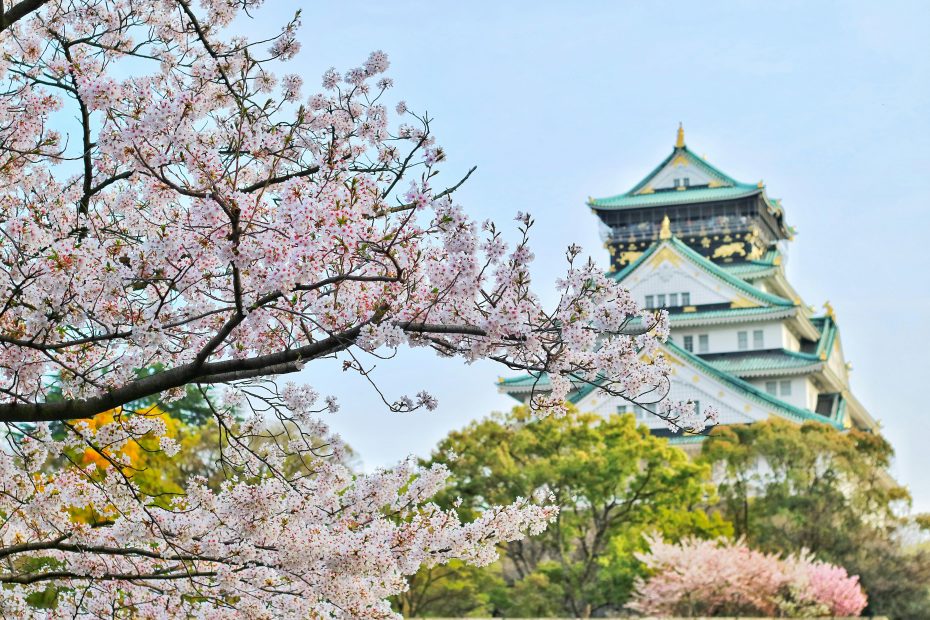
When the cherry blossoms hit peak bloom in Washington D.C., I find myself missing Japan more than usual. My three years living there were marked by a global pandemic, military deployments, underemployment, and a healthy amount of homesickness. Somehow, Japan still managed to settle itself in my heart and refuse to leave.
Aside from the food, culture, history, and pure magic, Japan should be on everyone’s travel bucket list because of its simple conveniences. Moving around their big cities and small country towns is surprisingly intuitive even with no prior language knowledge. In marketing, it’s a great lesson in listening to your customers’ complaints and fixing as many of the little things as you can. A bit of everyday empathy makes a huge difference.
Toddler Seats in Bathrooms
Using the bathroom alone is a luxury that parents with small children do not always have. You can’t leave a toddler by the sink and expect that he’ll be there when you return. He’ll be out the door in three seconds. Solution: a small toddler-sized seat with a buckle perched inside the bathroom stalls. I didn’t have children when I was living in Japan, so I didn’t appreciate how genius these are. If you’ve got a tiny escape artist, just buckle them in, do your business, retrieve them and leave. They’re never out of your sight. They can’t crawl under the stall. They can’t pull out all the toilet paper. They can’t lean under the gap and peek their tiny heads through to say “hi!” to your neighbor.
I’ve seen this device only once in America, at my local community center. I hope they catch on!
Luggage Lockers
While the public transit system itself is a masterpiece to behold, one of my favorite features as a traveler in Japan were the lockers at major transfer hubs. I often rented one for a small fee, just for a few hours, so I could more easily kill time in Kyoto, Osaka, or Tokyo before my hotel allowed for check-in. Shinkansen stations and local trains were so interconnected that it was incredibly easy to hop around, hop back, and hop to the hotel. I wouldn’t have to lug a suitcase through the aquarium, or stuff it in between seats at a crowded izakaya.
I don’t take the train often in the U.S., so I can’t speak to how prevalent this is here. Train and subway travel here is passable, at best, luggage lockers or no. But I know there’s no way baggage storage is as cheap, easy, trustworthy or intuitive as the system in Japan.
Pictures on Menus
Okay, so putting pictures of food on menus is specifically to help foreign tourists who don’t bother to learn the language. That way, we can point at a picture of ramen and awkwardly smile instead of mispronouncing the food to the waitress. But hear me out! I think this would be nice everywhere.
I’m a creature of habit. I order the same chicken pad thai at my local restaurant because I know it’s good and I know what I’m getting every time. But if I had a better frame of reference, maybe I would try something new just because it looked good! People don’t like the unknown. Show me what the sandwich looks like!
Drink Vending Machines
Vending machines in Japan are absolutely everywhere. I used them most often as a pit stop on a weekend long run, stopping near a convenience store or street corner to pick up a cold bottle of water before continuing my jog. But I also saw them in the strangest places. On a road trip through rural Japan, I saw one along a lonely highway. There were no other buildings in sight. It was just a vending machine and a trash can, sitting in a field. Minding their own business. Waiting for a thirsty visitor.
Besides being super convenient and cheap (a bottle of water usually costs 200 yen), they have the best drinks. In the cold weather seasons, most vending machines have a selection of drinks that come out hot. This was amazing on a chilly fall night, when all I wanted was a hot tea to warm my hands. I really cannot think of a similar convenience in America. Also, I hate to say it, but if we had these everywhere, our streets would be covered in trash.
Washcloths at Restaurants
Many restaurants in Japan offer a washcloth to diners when they first sit down. This confused me at first, and I didn’t quite know what I was expected to do. It’s not really going to be effective at cleaning your hands – it’s just water and a towel. But the simple pleasure of a cool washcloth in the summer and a warm washcloth in the winter to start a meal is just so nice.
That’s all. I suppose we’re not missing much, but it was so nice.
Sun protection
I have tried several different sunscreens since I’ve moved back from Japan. Mineral, chemical, cheap, expensive. None compare to my Japanese convenience store favorites. I didn’t explore Japanese (and Korean) skincare as much as I should have when I was in Asia, but I definitely fell in love. I had to. Japanese summers were brutal. The humidity was worse than the worst Virginia August and the sun felt stronger, though I’m not sure if it actually was. I found Japanese sunscreen to be so much more wearable than Western brands. My favorite was Skin Aqua, which has a thin, watery consistency and feels even lighter than applying lotion. It was easy to carry around in a bag, and it was budget friendly.
My favorite counterpart back home is Supergoop – which I love, but is definitely pricier. I am, however, excited to try the bottle I keep seeing at Target that looks like whipped cream. Ultimately, I’m American, through and through.
Conclusion
All of these little experiences remind me how small actions, inconveniences, and words can make or break a person’s attitude. That’s true when we’re shopping for produce, eating at a restaurant, seeing a doctor, or adopting a dog. And although we often remember the negatives, it’s great to reminisce on the positives. Changing something small can really have a huge effect, one that people remember for a long time.